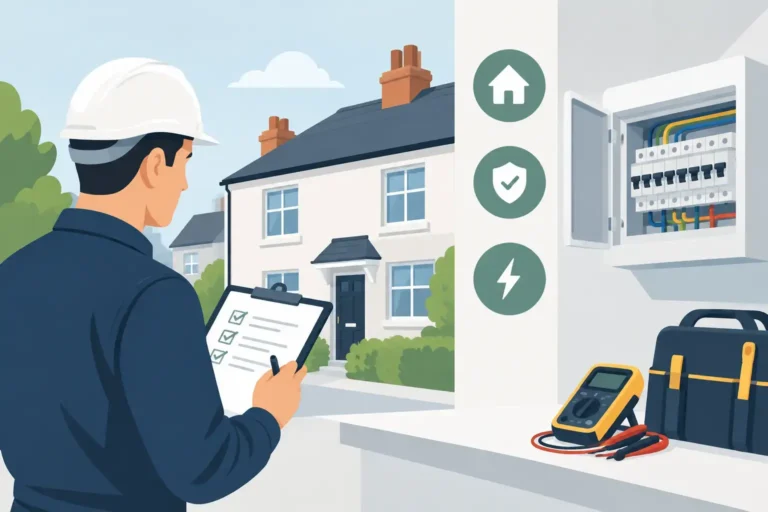
A safe RCD test procedure is a small piece of routine property maintenance, but it deliberately cuts power to part or all of your installation. That is why it should be planned, not treated as a quick button press on the way out of the house. For homes, rental properties and small businesses, the aim is simple: confirm that the protective device operates when asked, without creating avoidable risk for people, equipment or essential services.
An RCD, or residual current device, is designed to disconnect the electricity supply rapidly if it detects current flowing somewhere it should not. This can help reduce the risk of electric shock and electrical fire. Many newer consumer units use RCBOs instead, which provide the same type of residual-current protection for individual circuits alongside overload protection. Both may have a marked test button.
The button test is useful, but it has limits. It checks that the mechanism trips. It does not replace professional electrical inspection, instrument testing or investigation of a fault. It also does not prove that every circuit, socket and item of equipment is safe to use.
Before you start an RCD test
First, identify the consumer unit and read its labels. Older boards may have one RCD protecting several circuits, while a modern board may contain multiple RCDs or individual RCBOs. The label should indicate which circuits each device protects, but labels are not always accurate in older or altered installations. If anything is unclear, do not remove the consumer-unit cover to investigate.
A planned power interruption may affect more than lights and sockets. Before testing, let everyone in the property know that power may go off. Save computer work, shut down sensitive equipment properly and avoid testing while cooking, using power tools or charging an electric vehicle. In a business, arrange the test outside customer-facing hours where possible and ensure alarms, till systems, servers and controlled machinery are considered first.
Do not carry out a test during a grid outage, a suspected electrical fault, flooding, electrical work or when somebody depends on electrically powered medical equipment. If the property has an alarm system, check whether it has a battery backup and whether it needs resetting after a supply interruption.
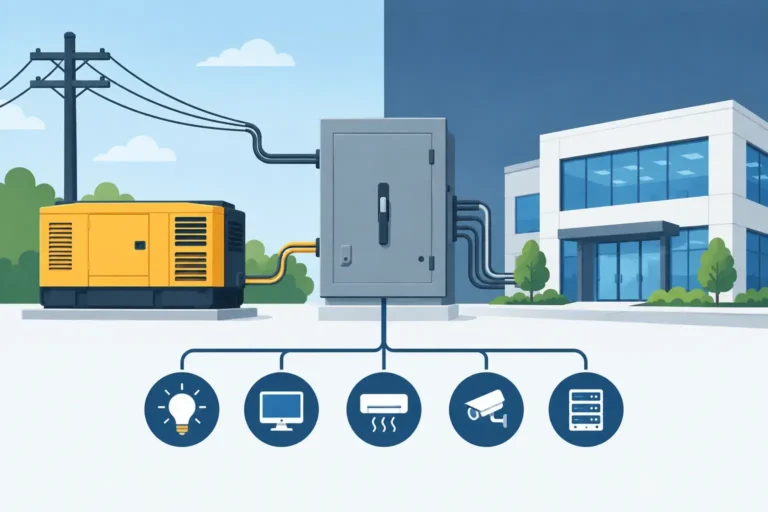
For solar, battery storage, emergency power supply and full house backup installations, take extra care. Some circuits may continue to receive power from a battery or EPS arrangement after the grid-side supply has been disconnected. A consumer-unit switch being off does not always mean every part of a renewable-energy installation is dead. Follow the operating information supplied with the system and contact the installer if you are unsure which supplies the RCD controls.
Safe RCD test procedure: step by step
The test button is normally labelled T or Test. It is intended for normal user operation, so you should only need to press that button and reset the switch. There should be no need to use tools or touch internal wiring.
Before pressing it, make sure hands are dry and the area around the consumer unit is dry, well lit and accessible. Keep children away from the board. Then follow this sequence:
- Check that the RCD or RCBO lever is in the on position and note which labelled circuits it protects.
- Press the marked test button firmly once.
- The device should trip promptly, with its lever moving to the off or tripped position. The circuits it protects should lose power.
- Reset the device by moving the lever fully to off first, then back to on. Some devices will not reset unless the lever has been moved fully down.
- Check that normal power has returned to the expected circuits and that any affected clocks, alarms or equipment have been restored.
Test one device at a time. If you have separate devices for upstairs sockets, downstairs sockets, lighting, kitchen circuits or an outbuilding, testing them individually helps you understand what each one protects. It is also a useful opportunity to spot missing or confusing circuit labels and arrange for them to be corrected.
You may hear a click and see lights go out immediately. That is the expected result. Do not assume that every socket in the property must go off, however. The outcome depends on the way the consumer unit is arranged. A device may protect only a limited number of circuits, and a battery backup system may keep nominated essential circuits operating.
If the RCD will not trip or reset
An RCD that does not trip when its test button is pressed needs professional attention. Do not keep pressing the button or assume it is working because electricity remains available. Record which device has failed and arrange for a qualified electrician to assess it promptly.
If the RCD trips but will not reset, first switch off or unplug appliances on the circuits it protects, where it is safe and practical to do so. A faulty appliance, damaged cable, moisture ingress or a wiring fault can prevent it from staying on. Attempt one reset after reducing the load. If it trips again or will not remain on, leave it off and call an electrician.
Repeatedly forcing a device back on can expose a developing fault and create a greater risk of damage or shock. A tripping RCD is doing its job by responding to an abnormal condition. The correct next step is fault-finding, not bypassing the protection or replacing a fuse with a larger rating.
If you notice burning smells, scorch marks, buzzing, heat at the consumer unit, water ingress or visible damage, do not touch the board beyond what is necessary to move away safely. Seek urgent help from a qualified electrician. Where there is immediate danger, follow emergency advice from the relevant services.
How often should you test it?
Check the manufacturer instructions and any labels on your consumer unit, as recommended test intervals can vary. As a practical rule, make RCD testing a regular planned task rather than waiting for an electrical problem. Pairing it with another recurring household or premises check can make it easier to remember.
Routine button testing is particularly worthwhile after building work, a consumer-unit upgrade, a rewire or changes to solar, battery or EV charging equipment. It should not be used as a substitute for the appropriate inspection and testing of the installation. Landlords, businesses and property managers may have additional responsibilities to maintain the electrical installation safely and demonstrate that it has been inspected at suitable intervals.
A qualified electrician uses calibrated test equipment to measure how an RCD performs at specified test currents and how quickly it disconnects. They can also check earthing, bonding, circuit condition, protective-device selection and the coordination of RCDs with solar inverters, batteries, EV chargers and backup supplies. These details matter because a system can appear to work normally while still needing corrective work.
Why renewable-energy homes need a clearer plan
Modern electrical systems are more capable than a traditional consumer unit and ring circuit arrangement. Solar generation, battery storage and EV charging can reduce bills and improve resilience, but they add switching arrangements and equipment that need to be understood as one installation.
For example, an EPS may keep selected circuits live during a power cut, while a full house backup system may have a more comprehensive changeover arrangement. The test method, reset sequence and expected result can therefore differ from a standard installation. Your installer should provide clear handover information identifying essential circuits, isolation points and the correct steps after a trip.
At Home EESS, installations are designed with safe operation and long-term support in mind, not simply fitted and left behind. If an RCD behaves unexpectedly after an upgrade, or you are uncertain how your backup supply responds during testing, ask for advice before making assumptions about what is isolated.
A correctly working RCD gives valuable protection, but the most reassuring result is knowing what it controls, what will switch off and who to call when the result is anything other than straightforward. Put the test in the diary, keep your consumer-unit labels clear and leave deeper electrical checks to a competent professional.