A home battery can keep selected parts of your property running when the grid fails, but only if the system is designed around the circuits that matter most. To configure battery backup circuits properly, you need to balance everyday comfort, battery capacity, inverter capability and electrical safety. The aim is not simply to keep power on. It is to provide dependable backup without overloading the system or compromising the installation.
For many homes and small businesses, a well-planned emergency power supply provides reassurance during a short interruption and practical protection during a longer outage. Refrigeration stays cold, broadband remains available, lighting works, and critical equipment can continue operating. The right arrangement depends on the building, the existing electrical installation and what you need power for.
Start with the outcome you need
The first decision is whether you want essential-circuit backup or full-house backup. These are different solutions, with different costs, technical requirements and levels of resilience.
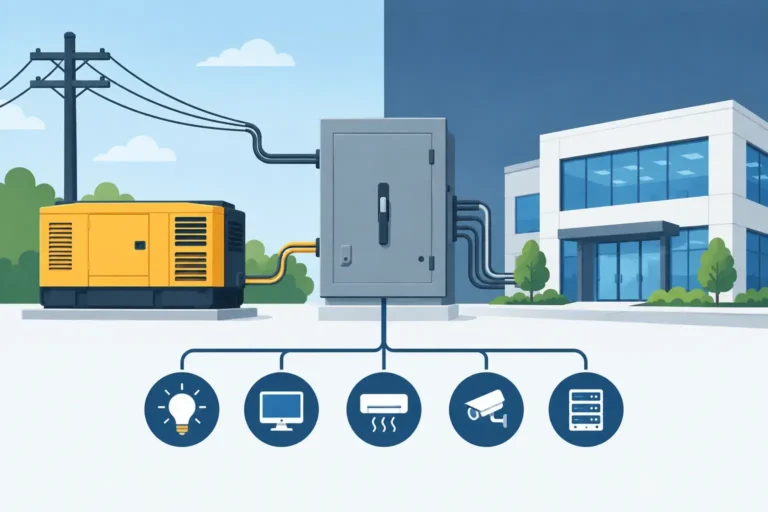
An essential-circuit setup supplies a dedicated backup consumer unit or selected circuits when there is a power cut. Typical choices include lighting, the fridge-freezer, broadband router, selected socket outlets, alarms, CCTV and a heating control circuit. This is often the most practical option because it preserves battery energy for the loads that genuinely matter.
Full-house backup allows the battery system to support the entire property when the grid supply is unavailable. It offers greater convenience, but it must be specified carefully. High-demand appliances such as electric showers, ovens, induction hobs, immersion heaters, heat pumps and EV chargers can exceed the output available from a battery inverter, especially when several operate at once. Full-house backup may therefore need load management, a larger inverter, more battery capacity, or agreed limits on how appliances are used during an outage.
For a business, the priority may be different. A small office might need IT equipment, lighting, security systems and communications. A landlord may want emergency lighting, communal controls or selected sockets maintained. The best design starts with a clear conversation about what cannot reasonably be without power.
Assess the circuits, not just the appliances
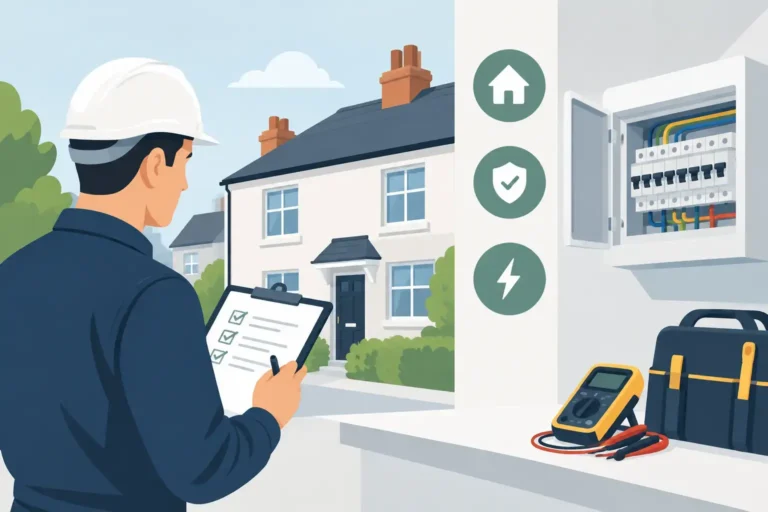
A battery does not back up an appliance in isolation. It supplies an electrical circuit. Before any design work, a qualified electrician should inspect the consumer unit, identify how circuits are arranged and confirm the condition of the installation.
A kitchen ring circuit, for example, may feed the fridge-freezer but also a kettle, toaster, microwave and dishwasher. Putting that entire circuit on backup could create unnecessary demand. In some cases, it makes sense to provide a dedicated circuit for refrigeration or a carefully selected group of essential sockets. In other properties, the existing circuit layout may already be suitable.
The same principle applies to lighting. Backing up all lighting is usually a modest load, particularly with LED fittings, and can make a significant difference to comfort and safety. However, an older property with mixed wiring, previous alterations or an overcrowded consumer unit may need remedial work before backup circuits can be added safely.
The survey should also consider:
- the condition and capacity of the existing consumer unit
- earthing and bonding arrangements
- cable routes and available space for additional equipment
- circuit labelling and previous electrical alterations
- the likely starting current of pumps, refrigeration and motor-driven equipment
- any solar PV, EV charger, generator or smart-control equipment already installed
This electrical groundwork is not an optional extra. A battery system is part of your wider installation, and the backup function must work safely alongside every connected supply and protective device.
Understand inverter power and battery capacity
Battery capacity is commonly measured in kilowatt-hours (kWh). It indicates how much stored energy is available. Inverter output is measured in kilowatts (kW) and indicates how much power can be delivered at one time. Both figures matter.
A battery with plenty of stored energy can still struggle if too many appliances demand power at once. Equally, a high-output inverter is of limited use if the battery is too small to support the chosen loads for long. A sensible backup design considers the normal running demand, short high-power peaks and the length of outage you want to prepare for.
As a simple example, lighting, a router, a television, refrigeration and a few charging points may use relatively little energy over several hours. Add an electric kettle, hair dryer or portable heater, and the demand can rise sharply. Appliances that produce heat are particularly demanding. This is why an essential-load approach often provides better real-world resilience than trying to power everything from a modest battery.
Solar generation can extend backup time during daylight, provided the battery and inverter system are designed to operate in backup mode with the solar array. Solar output is variable, though. A winter power cut on an overcast afternoon should not be planned around summer generation figures.
Configure battery backup circuits with safe changeover
When the mains supply fails, the property must be separated from the public electricity network before the battery begins supplying backup circuits. This process is known as islanding. It protects network engineers working on the supply and prevents power being exported onto a circuit that should be dead.
Modern battery systems can provide this changeover automatically through an EPS output, backup gateway or dedicated changeover equipment. The exact arrangement depends on the manufacturer, the inverter model and whether the system supports partial or full-house backup. Changeover can be very quick, but some sensitive equipment may still restart during the brief interruption. That should be discussed where continuous operation is critical.
The backup supply must also have appropriate protection and earthing arrangements for island mode. This is a specialist design consideration, not a DIY task. Protective devices that work correctly on a grid-connected supply may need a different approach when the inverter becomes the source of power. The installer must follow the equipment manufacturer’s instructions, current wiring regulations and applicable network requirements.
Clear labelling is equally important. Anyone working on the property in future should be able to identify which circuits are backed up, where isolation points are located and how the system behaves during a grid failure.
Plan for the loads that should stay off
A good backup system is as much about exclusion as inclusion. The following loads are often left off a standard backup supply unless the system has been specifically designed for them:
- electric showers and immersion heaters
- ovens, hobs and large cooking appliances
- EV chargers
- large air-conditioning systems and electric heaters
- heavy workshop machinery
- high-demand pumps or compressors
This does not mean these appliances can never be included. A larger, properly engineered full-house backup system may support some or all of them. It does mean their combined demand must be calculated honestly. A setup that works well during a demonstration is not necessarily one that will remain stable when the household is preparing dinner, charging a car and running hot water.
Load shedding can offer a middle ground. Smart controls can disconnect non-essential circuits automatically when battery output reaches a set limit, keeping priority services available. This approach can be especially useful in larger homes and commercial premises where resilience is required but unlimited backup power would be uneconomical.
Test the system before you need it
Once installed, the backup function should be commissioned and tested under controlled conditions. This confirms that the changeover operates correctly, the selected circuits are supplied as intended and the system responds sensibly to realistic loads.
It is worth asking your installer to explain the practical side of ownership: how to recognise backup mode, which appliances to avoid during an outage, how solar affects battery charging, and what happens if the battery reaches its minimum reserve. If the system includes monitoring, check that you can see battery state of charge and key alerts clearly.
Backup arrangements should also be reviewed if your property changes. A new heat pump, kitchen extension, EV charger, home office or workshop can alter the electrical demand considerably. The circuit plan that suited the house two years ago may no longer match how you use it.
Home EESS designs battery backup around the property and the people using it, from selected essential circuits to carefully planned full-house backup. The work begins with the existing electrics, because reliable resilience depends on quality installation as much as battery technology.
The most useful backup system is one you understand and can rely on when the lights go out. Choose the loads that protect your comfort, safety and daily routine, then let a competent electrical and battery specialist build the system around them.