A new EV charger, solar battery or full house backup system can be an excellent investment. But before equipment is selected, the electrical supply has to be understood. This electrical load assessment guide explains how a professional assessment protects your property, prevents avoidable disruption and helps ensure your energy system performs as promised.
For many homes and small businesses, the existing electrical installation was designed long before electric vehicles, induction hobs, heat pumps and battery storage became common. Adding more technology without checking capacity can lead to nuisance tripping, overloaded equipment or restrictions on how systems can be used together. A proper assessment provides the facts needed to design a safe, dependable solution.
What an electrical load assessment tells you
An electrical load assessment calculates how much electricity a property is likely to use at peak times and compares this with the capacity of its incoming supply and electrical installation. It is not simply a count of appliances. A home may have many circuits and devices connected, but they are unlikely to run at full output at precisely the same time.
The assessment considers the property’s maximum expected demand, often called maximum demand. This is particularly relevant where a homeowner wants to combine an EV charger, electric heating, a heat pump, solar PV, battery storage and backup power. For a business, it may also include machinery, commercial refrigeration, office equipment, air conditioning, lighting and future expansion.
The result helps an electrician specify the right protection, cabling, consumer unit capacity and control settings. It can also show whether the electricity network operator needs to be involved before work starts.
Why connected load is not the same as real demand
Connected load is the combined rated power of every appliance and circuit at a property. On paper, that figure can be far higher than the supply rating. This does not automatically mean there is a problem.
A 7 kW EV charger may be connected, for example, but it may charge overnight when cooking demand is low. An electric shower draws significant power, but only while it is in use. Diversity is the engineering principle used to allow for the fact that not everything operates at maximum load at the same time.
However, diversity must be applied carefully. It is less appropriate when large electrical loads can genuinely overlap. A household with two EV chargers, electric cooking, a heat pump and a battery charging from the grid may create high demand during the same evening period. The same applies to a small commercial site where equipment starts automatically after a power cut.
A competent assessment looks at how the building is actually used, rather than relying on assumptions or a standard template.
Start with the incoming electrical supply
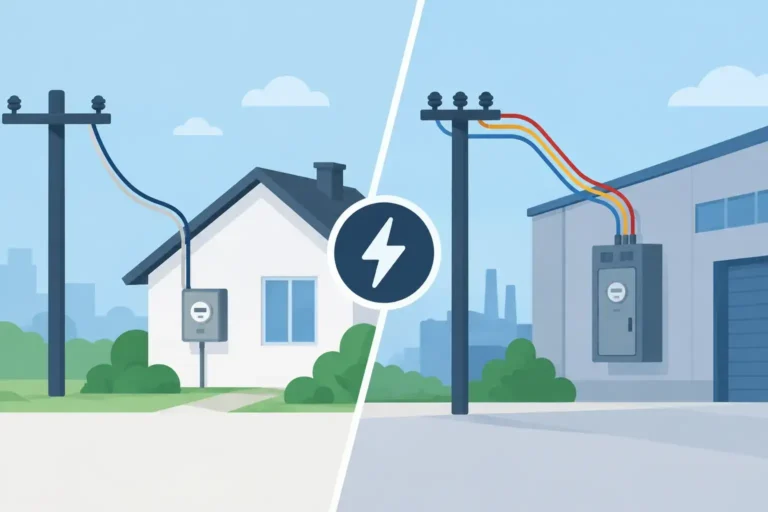
The incoming supply is the foundation of the assessment. Many UK homes have a single-phase supply with a main fuse commonly rated at 60 A, 80 A or 100 A. Larger properties and commercial premises may have a three-phase supply, which can provide greater capacity but still needs careful balancing and design.
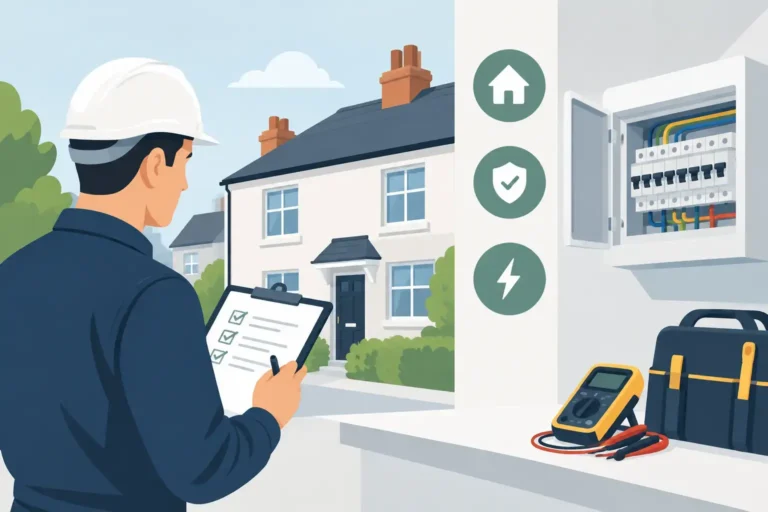
An electrician will inspect the service head, meter arrangement, main isolator, earthing and main bonding where accessible. They will also check the rating and condition of the consumer unit, main switch and existing protective devices. Older installations may have limitations that are not obvious from the number of spare ways in the consumer unit.
The supply fuse belongs to the distribution network operator, so it must never be altered by an installer or property owner. If the assessment indicates that more capacity is needed, the correct route may be an application to the network operator for a supply upgrade. This can affect project timing and cost, which is why identifying it early matters.
Assess the loads that matter most
The next stage is to identify fixed loads, high-demand appliances and the way occupants use them. Electricity bills can be useful for understanding annual consumption, but they do not show the short periods when demand peaks. Site inspection and a discussion with the customer are essential.
Particular attention should be given to:
- EV chargers, including the charging rate, number of vehicles and likely charging times.
- Electric showers, immersion heaters, induction hobs, ovens and underfloor heating.
- Heat pumps, electric boilers, air conditioning and ventilation equipment.
- Solar inverters and battery chargers, including their import and export settings.
- Workshop machinery, pumps, refrigeration, server equipment and commercial kitchen loads.
- Planned additions, such as a loft conversion, garden office or second EV.
The assessment should also consider loads that may not be obvious at first. A sump pump, electric gate, CCTV system, aquarium, medical equipment or home office may become especially important when planning emergency power or battery backup.
Solar, batteries and EV charging need coordinated design
Solar panels generate electricity, but they do not automatically increase the amount of power available from the grid. A solar PV system can reduce imports during daylight hours and export surplus energy, subject to the agreed connection arrangement. It should be designed alongside the property’s supply and existing circuits, not treated as an isolated addition.
Battery storage introduces another consideration: its inverter can charge batteries from the grid, discharge to support house loads and sometimes export. The power rating of the battery inverter matters as much as the battery’s energy capacity. A large battery measured in kWh may still have a relatively modest output in kW, which affects what it can run during a power cut.
EV charging is often the largest new load at a domestic property. Dynamic load balancing can monitor the overall demand and reduce charger output when the rest of the property needs more power. This may avoid the need for an immediate supply upgrade, but it is a managed compromise. Charging can take longer at busy times, and the controls must be correctly installed, commissioned and maintained.
For properties with solar, a smart charging strategy may prioritise surplus generation. For households focused on resilience, the design may reserve part of the battery for backup rather than using all stored energy to reduce evening imports. There is no one setting that suits every property.
Backup power requires a separate assessment
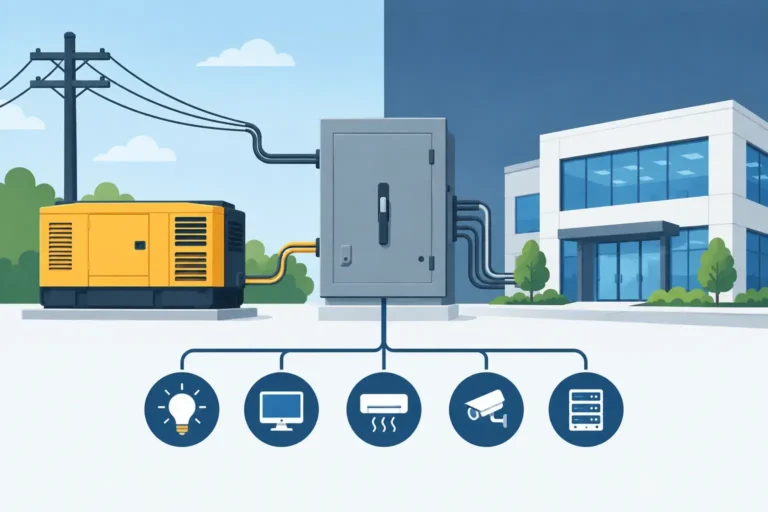
A full house backup system is not simply a battery connected to the consumer unit. During a grid outage, the system must safely isolate the property from the network and provide power only within the limits of the backup equipment.
The key question is not just, “How large is the battery?” It is, “Which loads need to work during an outage, and can they operate together?” A battery may comfortably support lighting, broadband, refrigeration, selected sockets and a heating control system. It may not be appropriate to supply an electric shower, large cooker, EV charger and heat pump all at once without substantial capacity and a carefully engineered design.
Some customers choose essential-circuit backup, which keeps selected circuits live. Others require full house backup, supported by load management that prevents the largest loads from exceeding the inverter’s capability. The right option depends on budget, expected outage requirements and how much convenience matters when the grid is unavailable.
When a consumer unit upgrade may be needed
An assessment can identify whether the existing consumer unit is suitable for new equipment. Space alone is not enough. The board must have appropriate main-switch capacity, suitable RCD or RCBO protection, safe cable routes and room for correctly selected protective devices.
Older consumer units, mixed protective-device arrangements or signs of deterioration may make an upgrade the sensible route. This is also an opportunity to improve circuit labelling, testing provision and surge protection where appropriate. Quality electrical work is about more than making a new system function on day one. It is about ensuring it remains safe, understandable and serviceable for years to come.
What to prepare before your assessment
You do not need to know the technical answers before speaking to an electrician. It does help to have recent electricity bills, details of planned appliances and a clear idea of your priorities. Are you primarily aiming to lower bills, charge an EV affordably, prepare for a heat pump, keep essential equipment running, or achieve full house backup?
If you have product specifications for an EV charger, battery or heat pump, keep them available. A site survey will confirm what is practical, but this information helps build a more accurate picture from the outset. It is equally useful to mention future plans. Designing for a second EV or an extension now can be more cost-effective than revisiting core electrical work later.
Home EESS approaches load assessments as part of the complete design process, bringing established electrical expertise to solar, battery, EV charging and backup projects. The aim is uncompromised safety, realistic performance and a system that fits the way your property works.
A well-planned electrical load assessment gives you confidence to invest in the right equipment rather than simply the biggest equipment. Start with the supply, consider how power is used at your busiest moments, and let the final design support lower bills, dependable charging and meaningful peace of mind when the grid is under pressure.