A power cut quickly shows which electrical circuits matter most. The lights may be inconvenient, but a fridge full of food, a broadband router needed for work, heating controls in winter or essential medical equipment can be far more significant. To select emergency power circuits properly, start with how your property is used during an outage – not with a guess at how many appliances you would like to keep running.
An emergency power supply, often called EPS, can keep selected circuits live from a battery when the grid fails. The best design is rarely the one that attempts to power everything. It is the one that delivers dependable power to the right places, for the right duration, without overloading the battery or compromising electrical safety.
Why circuit selection comes before battery size
Battery capacity is only one part of backup power. A larger battery can run more equipment for longer, but it cannot overcome the output limits of the inverter or make high-demand appliances practical during a prolonged outage. A sensible circuit plan lets the system focus its available power where it has real value.
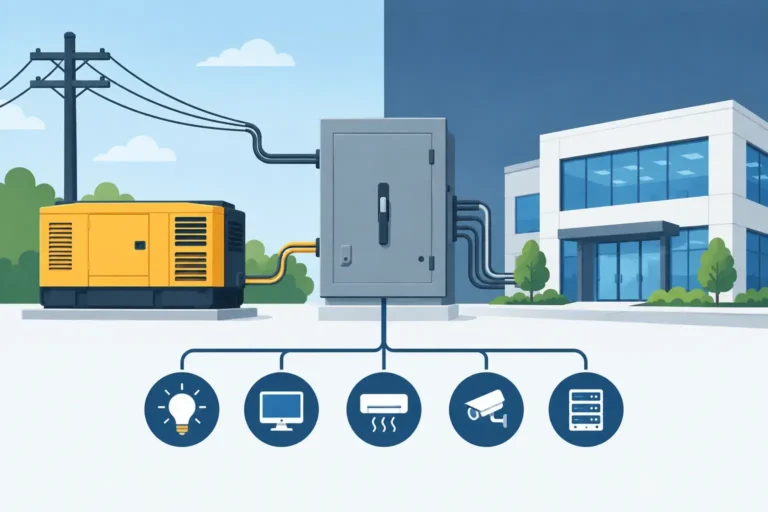
For many homes, the priority is continuity: lighting in key rooms, the fridge and freezer, internet equipment, sockets for phone charging, and the boiler controls or circulation pump. For a business, it may be a router, alarm, CCTV, card terminal, selected lighting and a workstation. The priorities depend on the building, the people using it and the consequences of being without power.
This is also why a dedicated emergency circuits arrangement is often a better investment than trying to make every circuit available. It gives clear control over demand and makes it easier to understand what will remain operational during a grid failure.
How to select emergency power circuits for your property
Begin by imagining a realistic outage, rather than an ideal one. Consider a dark winter evening, a working weekday or a weekend when the house is occupied. Which services would keep the property safe, habitable and functional for several hours?
For most households, the following are sensible starting points:
- Essential lighting, usually covering halls, kitchens, bathrooms and main living areas
- Refrigeration circuits for a fridge and freezer
- Broadband router, Wi-Fi equipment and selected socket outlets for communications
- Central-heating controls, boilers and pumps where their electrical demand suits the backup system
- Security equipment, such as alarms, CCTV or electric gates where required
The right answer is not identical for every property. A household with someone working from home may place internet and office sockets high on the list. A landlord may prioritise safety lighting, heating controls and communal security. A small business may need communications and payment systems, while a workshop may need only enough power to shut down equipment safely.
It helps to separate genuine essentials from conveniences. A television may be welcome during an outage, but an electric shower, induction hob, immersion heater, tumble dryer and EV charger can use a substantial amount of power. Including them can require a much larger inverter and battery system, while dramatically reducing backup duration.
Check the circuits, not just the appliances
A consumer unit is arranged in circuits, so backup planning must follow the wiring already in place. One socket circuit may serve the fridge, kettle, microwave, television and several other loads. If that entire circuit is backed up, all of those appliances could be used at once unless you manage them carefully.
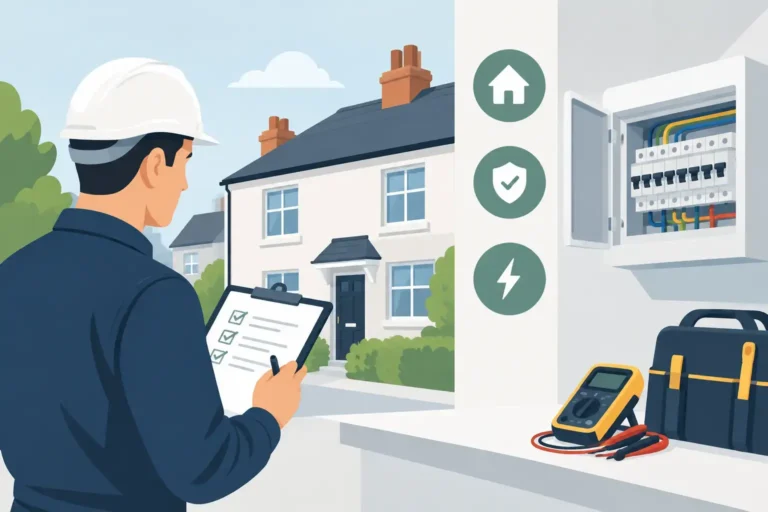
During a site survey, an experienced electrician can identify what each circuit supplies and whether it should be retained, divided or moved to a dedicated emergency power consumer unit. In some homes, the cleanest solution is to create separate circuits for critical loads, such as refrigeration, broadband and selected sockets. This avoids relying on extension leads and makes the backup arrangement easier to use safely.
Older properties can need more investigation. Circuit labels are not always accurate, previous alterations may have changed the wiring, and a consumer-unit upgrade may be advisable before an EPS system is installed. This work should be treated as part of the backup design, not an afterthought.
Match power demand with battery runtime
There are two different figures to consider: power and energy. Power, measured in kilowatts, is the amount the inverter can supply at any one time. Energy, measured in kilowatt-hours, is the amount stored in the battery and determines how long the connected loads can run.
A battery may hold enough energy for an evening of lighting, refrigeration and communications, but the inverter still needs to handle appliances starting and running at the same time. Refrigerators, pumps and some motors can draw a higher current when starting. High-load appliances can also consume stored energy very quickly, even if they only operate for a short period.
This is where realistic use matters. A modest essential-load setup may provide useful backup for many hours. A full house backup system can provide greater convenience, but its performance will depend on what is switched on. If the grid is down, using the oven, electric heating and EV charger together is unlikely to be a sensible operating plan.
Solar can extend battery runtime during daylight, provided conditions are suitable and the system is designed to continue generating in backup mode. It should not be treated as a guarantee of unlimited power. Winter generation, cloud cover, roof orientation and household demand all affect the result.
Choose the right level of backup
There are three practical approaches, each with different costs and benefits.
Essential circuits backup
This arrangement supports a carefully chosen group of circuits. It is usually the most efficient route to peace of mind, because battery capacity is reserved for the loads that matter. It suits homeowners who want dependable lighting, refrigeration, communications and heating controls without paying to support every electrical demand in the house.
Partial property backup
A partial backup system can cover a wider selection of circuits, such as more lighting and socket circuits across the property. It offers greater flexibility but needs more careful load management. This can work well in larger homes, home offices and small commercial premises where several areas need to remain usable.
Full house backup
Full house backup is designed to keep the property supplied more comprehensively when the grid fails. It can offer excellent resilience, particularly where outages are disruptive or where a household has critical needs. However, full house backup does not mean every appliance can run without limits. The inverter rating, battery capacity and household behaviour still define what is practical.
A professional design will explain these limits clearly. Quality backup power should feel reassuring, not leave you guessing which appliances are safe to use.
Safety is central to an EPS installation
Emergency power systems must isolate from the electricity network during an outage. This prevents battery or solar power from feeding back into external cables, where it could endanger network engineers working on repairs. The changeover arrangement, earthing provision, protective devices and inverter settings must all be specified correctly for the property and equipment.
The system should also be clearly labelled. Everyone in the household or workplace needs to know which circuits are backed up, what the system can support and which high-demand appliances should be avoided during an outage. Testing the transfer to backup power after installation is equally important, as is knowing how to check battery status and respond to any alerts.
Do not assume an existing solar battery automatically provides power during a power cut. Many battery systems shut down with the grid unless an EPS or backup function has been designed and installed. This is a common point of confusion, and it is worth confirming before selecting equipment.
Plan for how the property will change
Your circuit selection should allow for likely future needs. A new home office, electric vehicle, heat pump, loft conversion or garden office can change the way electricity is used. Equally, a growing family or an ageing relative may make backup lighting, heating controls and communications more valuable.
It is often sensible to install a system that meets current priorities while leaving a practical route to add battery capacity or expand backup circuits later. The right approach depends on the existing electrical installation, available space and budget. Planning ahead can avoid unnecessary disruption when your energy needs change.
At Home EESS, we assess the property, your essential loads and the condition of the electrical installation before recommending an emergency power solution. That means clear expectations, safe circuit separation and a system designed for real life rather than a generic specification.
Start with the power you cannot reasonably be without. Once those circuits are identified, the battery, inverter and backup arrangement can be specified around them – giving you useful resilience when you need it most.