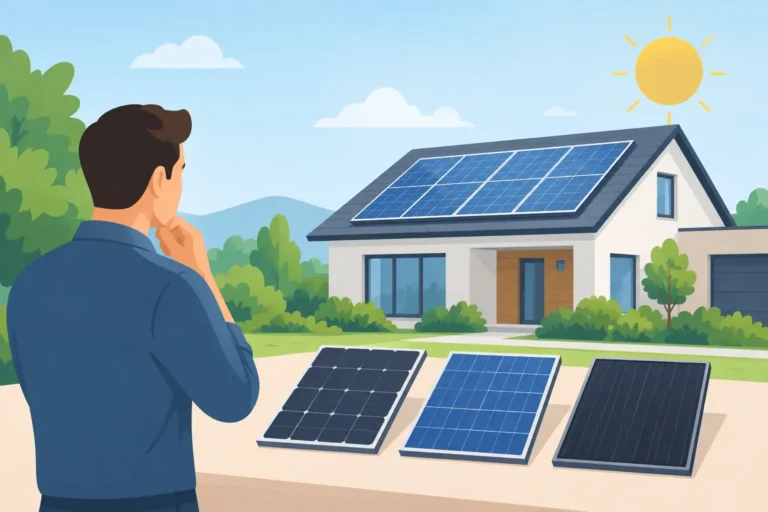
Your solar panels may generate their strongest output while the house is empty, then your electricity demand rises after sunset. A solar battery retrofit installation changes that pattern by storing surplus generation for use later, rather than sending as much of it back to the grid.
For many homes and small businesses, that means buying less electricity during the evening peak, making better use of an existing solar investment and gaining more control over energy costs. Where resilience is a priority, the right battery system can also provide emergency power during a grid failure. The detail matters, however: not every battery provides backup as standard, and the best design depends on your existing electrical installation, energy habits and future plans.
What is a solar battery retrofit installation?
A retrofit battery is added to an existing solar PV system. The panels, inverter and generation meter may already be in place, while the battery, battery inverter and required protection equipment are installed afterwards.
This is often a practical route for households whose solar panels were installed several years ago, before home storage became widely adopted. It can also suit property owners who want to improve their solar self-consumption without replacing a working PV system.
The battery monitors generation and household demand. When your panels are producing more than the property is using, the system charges the battery. When production falls, the battery can discharge to support your appliances. Exact behaviour is set around the equipment specification, tariff and the priorities agreed for your property.
Why retrofit a battery now?
The value of solar is no longer limited to what your panels generate at midday. Storage lets you hold onto more of that lower-cost electricity for the hours when you are actually cooking, working from home, charging an EV or running the household.
A battery can be particularly worthwhile where daytime solar export is high and evening grid imports are significant. It can also work alongside a time-of-use tariff, charging at lower-cost periods where appropriate and reducing imports at more expensive times. This needs careful configuration. A battery should support your energy goals, not simply charge from the grid without a clear financial reason.
For landlords and business owners, a well-designed system can provide more predictable daytime energy use and improve the practical appeal of a property. For homeowners, the benefit is usually straightforward: more self-generated electricity available when it is needed, with less reliance on the grid.
Start with a proper site and electrical survey
A battery is not an off-the-shelf add-on. Before equipment is selected, an installer should review the solar system, consumer unit, earthing arrangement, cable routes, available space and the condition of the wider electrical installation.
The existing inverter is a key consideration. Some systems are suited to an AC-coupled battery, which operates alongside the present solar inverter. Others may be better served by replacing an older inverter with a hybrid model that manages both solar generation and storage. Neither option is automatically better. AC coupling can preserve a sound existing PV setup, while a hybrid arrangement may be sensible where the original inverter is nearing the end of its useful life or a more integrated design is required.
Your consumption profile matters just as much as the hardware. A household with modest overnight demand may need a different battery capacity from a family with an electric vehicle, heat pump, home office and regular evening use. Oversizing a battery can add cost without delivering proportionate savings. Undersizing it can leave valuable solar generation unused.
A competent survey also identifies any electrical work needed before installation. An older consumer unit, limited spare ways, unsuitable protection or poor earthing should be addressed properly. Compromising on the electrical foundations is not a route to a reliable energy system.
Battery capacity is only one part of the decision
Battery capacity is measured in kilowatt-hours, or kWh. It indicates how much energy can be stored, but it does not tell the whole story. The battery’s power rating, measured in kilowatts, determines how much electricity it can supply at one time.
For example, a battery may have enough stored energy for an evening’s general use but still be unable to run several high-load appliances at once if its output rating is limited. Electric showers, ovens, induction hobs, heat pumps and EV chargers can place substantial demands on a system.
When specifying a battery, we look beyond the headline capacity. Useful questions include how much solar is typically exported, what electricity is imported after dark, whether an EV charger will be added, and whether backup power is a requirement. Battery warranty terms, usable capacity, expected cycling and manufacturer support all deserve attention too.
Backup power needs separate planning
Many customers assume that solar panels and a battery will continue to power the property whenever the grid fails. That is not always the case. For safety, a standard grid-connected solar system normally shuts down during an outage. This prevents electricity being fed back into the network while engineers are working on it.
To provide power during an outage, the battery system needs suitable emergency power supply equipment and a correctly designed changeover arrangement. An EPS may supply selected essential circuits, such as lighting, refrigeration, broadband, security equipment and sockets for charging devices. This is a valuable level of protection for many homes.
Full house backup is a different level of design. It requires a detailed assessment of the property’s load, starting currents and any appliances that should be managed during an outage. It may be achievable, but it is not the right answer for every property. A clear conversation before installation prevents disappointment later.
Essential-circuit backup or full house backup?
Essential-circuit backup is often the more cost-effective option. It keeps the most useful parts of the property operating while protecting the battery from unnecessary high loads. Full house backup offers greater convenience and resilience, but it generally requires more design work and may require load management or a larger battery system.
The right choice comes down to what you genuinely need to keep running. A carefully selected backup circuit can deliver considerable peace of mind without paying for capacity that is rarely used.
Installation quality protects performance and safety
A battery installation involves high-energy DC and AC equipment, protective devices, isolation, monitoring and integration with your existing supply. It should be completed by experienced electrical professionals who understand both renewable technology and the wider property installation.
Good workmanship includes secure mounting, appropriately sized cables, clearly labelled isolation points, correct protection settings and tidy, accessible equipment positioning. The installation should also account for ventilation requirements, manufacturer clearances, fire considerations and safe access for future servicing.
Once installed, the system must be commissioned properly. That means testing its operation, confirming solar charging and battery discharge behaviour, setting export and tariff preferences where applicable, and showing you how to use the monitoring platform. You should know what the system is designed to do, what happens during a power cut and who to contact if you need support.
Planning for EV charging and future demand
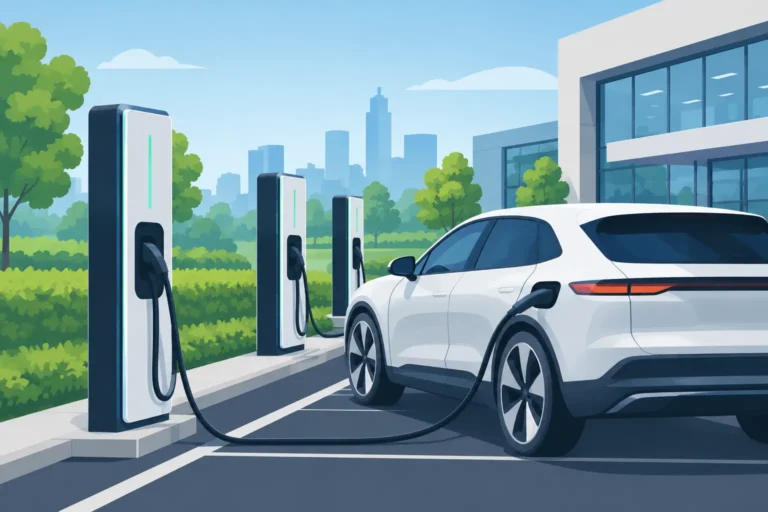
A battery retrofit is an ideal time to consider the rest of your electrical plans. If an EV charger, heat pump, extension or garden office is likely in the next few years, allow for it at the design stage. It may affect battery size, consumer-unit capacity, cable routes and how loads are prioritised.
Smart control can help a solar battery, EV charger and household demand work together, but the system still needs sensible limits. Charging an EV from surplus solar can be highly effective on bright days, yet the car and battery may compete for the same generation. The best settings depend on whether your priority is evening household use, lower-cost overnight EV charging, backup reserve or a balance between them.
For properties across London, Hertfordshire, Bedfordshire, Buckinghamshire and the Home Counties, local site conditions can vary widely. A proper survey turns those variables into a clear, safe proposal rather than a generic battery package.
What to expect from the process
A well-managed retrofit begins with a conversation about your bills, existing solar system and resilience priorities. The survey then confirms what is practical and identifies any required upgrades. Following specification, the installation team fits and tests the equipment, completes the relevant notifications and provides the handover information you need.
Home EESS approaches this as a complete electrical project, not just a battery delivery. That includes specifying current technology, protecting the integrity of the existing system and supporting the installation after commissioning. Where solar work is involved, MCS-backed standards and clear documentation provide further reassurance.
A solar battery should make your property easier and less expensive to run, not more complicated. Start with how you use electricity and what you need during an outage, then let a safe, site-specific design take it from there.