A power cut quickly shows which parts of a property matter most. It is rarely every appliance. More often, it is the lights, broadband router, fridge, heating controls and a way to charge a mobile phone. So, what can an EPS power? With the right solar battery system and electrical design, an Emergency Power Supply can keep carefully chosen essential circuits running when the grid is unavailable.
An EPS is a practical route to greater resilience, but it is not automatically the same as full house backup. Its capability depends on the battery, inverter, circuit design and the appliances you expect it to support. A properly specified installation makes that distinction clear before any work begins.
What can an EPS power in a typical home?
Most EPS installations are designed around essential loads rather than the entire consumer unit. This keeps the system useful, safe and proportionate to the available battery capacity.
For many households, an EPS can supply selected lighting circuits, Wi-Fi and broadband equipment, mobile phone and laptop charging, a television, a fridge-freezer and heating controls. Depending on the system specification, it may also support a boiler, circulation pump, security alarm, CCTV system, electric gates or a small number of sockets in priority rooms.
This means you can retain the things that make a power cut manageable: light where you need it, communication with the outside world, chilled food, access to information and, where the heating system is compatible, central heating controls. For a home office, an EPS can also protect the practical basics needed to continue working for a limited period.
The same principle applies to small businesses. A selected-circuit EPS may keep network equipment, security systems, emergency lighting, tills, access control, computers or refrigeration running. The right design depends on the type of business and the consequences of downtime.
EPS power is about priorities, not simply wattage
The answer to what an EPS can power is not only about the size of the battery. It also depends on how much power an appliance draws at one time and how long you need it to run.
A battery stores energy, normally measured in kilowatt-hours (kWh). This helps determine runtime. The inverter provides power, measured in kilowatts (kW), which determines how much the system can run at once. A battery may contain enough stored energy to power modest household essentials for many hours, yet still be unable to start or support several high-demand appliances together if the inverter output is limited.
A fridge, for example, uses relatively little energy across a day but can draw a higher starting current when its compressor begins running. A boiler may not use much electricity overall, but its controls and pump still need a reliable supply. These details matter when selecting equipment and planning protected circuits.
Runtime also changes with household behaviour. Running lights, Wi-Fi, a fridge and a few chargers is very different from adding a tumble dryer, electric oven or immersion heater. Good EPS design starts with an honest assessment of what you want to keep running, rather than an unrealistic promise that a standard battery will supply everything without compromise.
Appliances an EPS will not usually support
High-load electric appliances can exhaust stored energy quickly or exceed the inverter’s available output. In most standard EPS installations, it is sensible to leave these outside the backed-up supply:
- Electric ovens, hobs and induction cookers
- Electric showers and immersion heaters
- Tumble dryers and washing machines
- Kettles, toasters and other high-wattage kitchen appliances
- Air conditioning and large electric heating loads
- Most EV chargers
That does not mean full house backup is impossible. It means the system needs to be designed for it. A larger battery bank, a higher-output inverter, suitable changeover equipment and a detailed review of the property’s electrical demand may be required. For some homes, whole-property resilience is the right answer. For others, protecting a small number of critical circuits delivers better value and longer battery runtime.
Selected circuits versus full house backup
A selected-circuit EPS is often the most practical option for homes looking for reassurance during occasional outages. The installer identifies the circuits that matter most, such as lighting, heating controls, kitchen refrigeration and designated socket circuits, then separates or supplies them through the emergency backup arrangement.
When a grid outage occurs, the battery system switches to EPS operation and supplies those agreed loads. Non-essential circuits remain off. This approach helps prevent high-demand appliances from draining the battery or overloading the inverter.
Full house backup takes a broader approach. It can maintain power across much more of the property, subject to the system’s rated output and battery capacity. It is particularly relevant for households with critical medical equipment, rural or outage-prone locations, home businesses, security requirements or a strong preference for normal operation during an interruption.
However, full house backup requires careful load management. Even a substantial system has limits. You may still need to avoid using several power-hungry appliances at once during a cut. A quality installation should explain what will operate automatically, what must be managed manually and what level of backup duration is realistic.
Will solar panels work during a power cut?
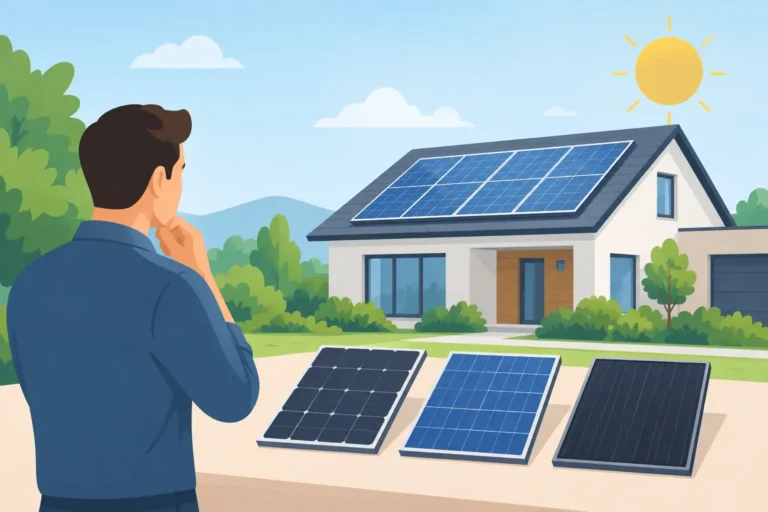
Solar panels can help extend battery runtime during daylight, but only if the solar and battery system is designed to operate safely in backup mode. Standard grid-tied solar systems normally shut down during a grid failure. This protects utility engineers who may be working on the local network.
A compatible hybrid inverter or dedicated backup arrangement can isolate your property from the grid and use solar generation to support the backed-up circuits and recharge the battery when conditions allow. This is known as islanding. It must be engineered correctly, with suitable protection and changeover controls.
Solar output will vary with the weather, season and time of day. In bright summer conditions, solar may significantly reduce battery use or recharge it while the outage continues. On a dark winter afternoon, the battery will do more of the work. Backup planning should always allow for the least favourable periods, not only the best-case sunny day.
How quickly does an EPS switch on?
The changeover time depends on the equipment selected. Many modern battery systems switch rapidly enough that selected circuits experience only a brief interruption, while some sensitive devices may restart. This is usually suitable for household essentials such as lighting, broadband equipment and refrigeration.
If uninterrupted power is critical for specialist equipment, that needs to be discussed at the design stage. Certain loads may need a dedicated uninterruptible power supply in addition to the property’s EPS arrangement. The goal is to match the level of protection to the real-world need, rather than assume every backup solution works in exactly the same way.
Safe installation matters as much as battery size
An EPS installation changes how electricity is supplied during a grid outage. It is not a battery connected to ordinary sockets. The system must prevent electricity from feeding back into the grid, protect the installation and ensure backed-up circuits are clearly identified and tested.
A competent electrical contractor will assess the existing consumer unit, earthing arrangement, circuit loading, equipment compatibility and the best location for the battery and associated control equipment. Older properties, extensions and properties with multiple consumer units can all require a more detailed approach.
The work should also account for fire safety, cable routes, manufacturer requirements and future expansion. If you intend to add more solar, increase battery capacity or install an EV charger later, it is worth considering that from the outset. A well-planned system avoids unnecessary rework and gives you clearer options as your energy needs change.
Choosing the right EPS for your property
The best starting point is to identify your non-negotiables during a power cut. Do you need heating controls and refrigeration? Is Wi-Fi essential for working from home? Do you have a sump pump, electric gate, alarm system or medical equipment that needs reliable power? How long do outages typically last in your area?
From there, the system can be sized around expected loads, desired runtime and whether solar charging should contribute during an outage. Home EESS can assess the property’s electrical installation alongside its solar and battery requirements, so the backup arrangement works as part of a safe, complete system rather than as an afterthought.
The most valuable EPS is not necessarily the largest one. It is the one that keeps your agreed essentials available when the grid fails, without compromising safety, quality or the long-term performance of your home energy system.