A fuseboard is easy to ignore when everything appears to work. But when should a fuseboard be replaced? Usually, the answer is not simply “when it gets old”. It is when its condition, protective devices or capacity can no longer provide the level of safety your property and plans require.
For many homes and small businesses, that point arrives during a renovation, before adding solar panels, battery storage, an EV charger or full house backup. These upgrades can make a property more efficient and resilient, but they must be built on a safe, properly assessed electrical installation.
When should a fuseboard be replaced?
A replacement should be considered when an inspection identifies defects, when the existing board lacks suitable protection, or when it cannot safely accommodate new circuits and electrical demand. A qualified electrician should confirm this through inspection and testing rather than judging the board by appearance alone.
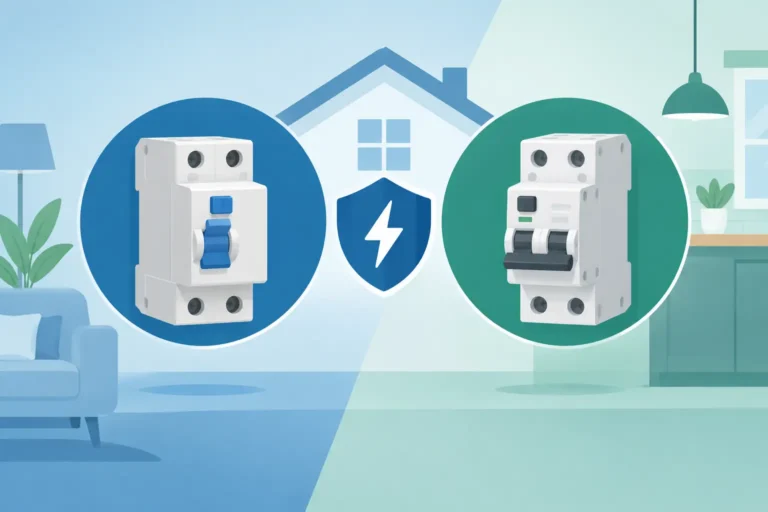
Older fuseboards with rewireable fuse wire are a common reason to upgrade. They can still be found in otherwise well-kept properties, but they do not offer the same protection or convenience as a modern consumer unit with miniature circuit breakers and residual current device protection.
A modern board is designed to disconnect a circuit quickly when it detects a fault. This reduces the risk of electric shock and fire, while making it clearer which circuit has operated. It also makes future work, such as adding an EV charging point or a battery inverter, more straightforward to design and test.
Age alone does not automatically mean a fuseboard is unsafe. A board installed years ago may remain serviceable if it is in good condition and has been correctly maintained. Equally, a newer unit may need attention if it has been poorly installed, damaged, overloaded or altered without proper testing. The condition of the complete installation matters.
Warning signs that should not be ignored
Some problems need urgent investigation rather than a planned upgrade. If you notice a burning smell, scorching, discolouration around the fuseboard, crackling noises, heat from the enclosure, damaged covers or exposed wiring, switch off power where it is safe to do so and arrange for an electrician to inspect it promptly.
Frequent tripping is another sign worth taking seriously. A circuit breaker or RCD can trip for a legitimate reason, such as a faulty appliance or water entering an outdoor circuit. However, repeated trips are not something to reset and forget. They may indicate an overloaded circuit, deteriorating wiring, a faulty accessory or an issue with the protective devices themselves.
Other signs that a replacement may be appropriate include:
- Rewireable fuses or obsolete cartridge fuses that are difficult to identify or replace correctly.
- No RCD protection, or RCD protection that does not operate correctly during testing.
- A wooden, damaged or poorly sealed enclosure, particularly where cables are crowded or entry points are open.
- No spare capacity for essential new circuits.
- Mixed, unclear or missing circuit labels that make safe isolation and fault-finding difficult.
- Evidence of previous alterations that have not been completed to a satisfactory standard.
These signs do not all mean that every part of the electrical installation must be replaced. An electrician can identify whether the issue is localised or whether a consumer-unit upgrade is the sensible, safer long-term option.
Why RCD and RCBO protection matters
Modern consumer units commonly use RCDs and RCBOs. In plain English, these devices monitor electrical circuits and disconnect supply rapidly when they detect certain fault conditions.
An RCD provides additional protection against electric shock and can protect several circuits. An RCBO combines that function with overcurrent protection for an individual circuit. RCBOs can offer a practical advantage because a fault on one circuit is less likely to switch off several unrelated circuits at once.
That distinction matters in a working household or business. If an outdoor socket develops a fault, you do not want it unnecessarily taking out lighting, refrigeration, broadband equipment or other essential circuits. For properties planning emergency power or battery backup, careful circuit separation becomes even more valuable.
Surge protection may also be recommended as part of a new consumer unit, depending on the assessment. It can help protect sensitive electronics from transient overvoltages caused by events such as switching operations or electrical disturbances on the network. The right arrangement depends on the property, its equipment and the outcome of the installation design.
Replacing a fuseboard before solar, batteries or EV charging
A fuseboard upgrade is often considered before renewable-energy work because solar PV, battery storage and EV chargers are not simple plug-in additions. Each may require dedicated circuits, appropriate isolation, protection and clear labelling. The installer also needs to consider cable sizes, earthing, load demand and how the new equipment interacts with the wider installation.
For example, an EV charger can add a substantial and sustained load, particularly if several vehicles are charged at a business premises. Solar and battery systems introduce generation and storage equipment that must be integrated correctly. An emergency power supply or full house backup system requires even more careful planning, as selected circuits must operate safely when the grid supply is unavailable.
A modern consumer unit does not guarantee that these systems can be added without further work. The existing supply characteristics, earthing arrangement and condition of the property wiring still need to be checked. But a well-designed, spacious and properly protected board gives the project a sound starting point and avoids compromising quality to work around an outdated installation.
It can also be more cost-effective to coordinate the electrical work. If you are renovating a kitchen, converting a loft, installing air conditioning or planning a garden office, assessing the consumer unit alongside the wider project helps prevent repeated disruption and duplicated work later.
What happens during a consumer-unit replacement?
Replacing a fuseboard is not simply a case of removing one box and fitting another. Before work begins, an electrician should inspect and test the existing circuits to establish whether they are suitable to be connected to a new consumer unit.
This testing can reveal issues that were hidden behind sockets, under floors or within older wiring. Depending on the findings, work may include correcting poor connections, improving earthing and bonding, replacing damaged accessories, separating circuits or recommending further remedial work. A reputable contractor will explain what is essential for safety, what is advisable for long-term reliability and what can reasonably be planned for a later stage.
The property’s power will need to be switched off while the replacement is completed and tested. For a straightforward domestic installation, this is often managed within a day, although the timescale depends on the number of circuits, access, the condition of the wiring and any faults uncovered during testing.
Once complete, the work should be tested, labelled and documented. You should receive the relevant electrical certification, giving you a clear record for your property and supporting future alterations, maintenance, sales or landlord responsibilities.
Landlords, homeowners and business owners: do not wait for failure
Landlords have a clear duty to keep electrical installations safe and to arrange periodic inspection and testing at the required intervals. An Electrical Installation Condition Report can identify observations that need remedial work, including issues with a consumer unit or its protective devices.
For homeowners, an inspection is particularly sensible after buying an older property, before major refurbishment, after flood or fire damage, or where the electrical history is unclear. If you have inherited a board with mystery switches and faded labels, testing offers more useful answers than guessing.
Small businesses should also consider how much depends on their electricity supply. A board that trips unpredictably can interrupt tills, IT, refrigeration, security and charging equipment. Planned upgrades are generally less disruptive than reactive work after a failure.
Choose an upgrade that leaves room for the future
The right replacement is not necessarily the largest consumer unit available. It should be specified for your current circuits and realistic future needs, with appropriate protection, neat cable management and enough practical capacity for planned additions.
If solar, battery storage, EV charging or backup power is on your horizon, say so at the start. This allows the electrical design to account for dedicated circuits and avoids a short-term fix that limits your options later.
Home EESS can assess the condition of your existing installation and recommend a safe, high-quality route forward, whether you need a straightforward consumer-unit upgrade or a wider energy and backup project. A clear inspection now can give you the confidence to invest in lower bills, dependable charging and power resilience when you are ready.